

Introduction
Retail merchandising and supply chain operations have never been more complex. Global disruptions, fluctuating demand, sustainability pressures, and rising customer expectations mean retailers must operate with more agility than ever. Traditional systems, though powerful, often struggle with the speed and scale of these challenges.
This is where cognitive automation in Oracle Retail supply chains comes in.
Acting as an intelligent layer across the Oracle Retail Merchandising, Planning, and downstream supply chain applications, cognitive automation enables retailers to shift from reactive decision-making to proactive, data-driven operations, bringing agility, precision, and resilience to modern retail supply chains.
What Is Cognitive Automation in Oracle Retail Supply Chains?
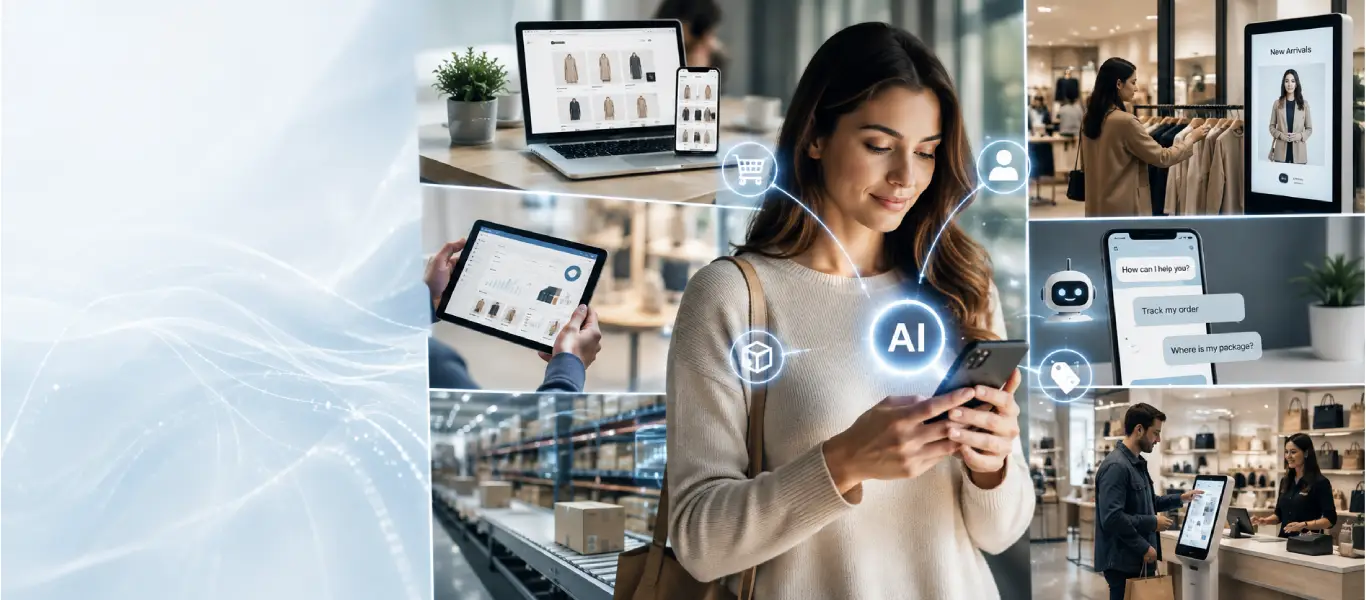
Cognitive automation in Oracle Retail refers to the use of AI agents, machine learning, and generative AI to automate and optimize decisions across merchandising, assortment planning, allocation, replenishment, procurement, logistics, and store operations.
Unlike traditional rule-based automation, cognitive automation learns from data, predicts outcomes, and adapts in real time, enabling retailers to run more responsive, self-optimizing supply chains.
The Power of Cognitive Automation in Merchandising and Supply Chain
Oracle’s Embedded AI Agents
Oracle has embedded AI agents across its supply-chain platforms to transform day-to-day workflows. These agents automate routine activities such as purchase requisitions, procurement approvals, compliance validation, and merchandising decision support, such as replenishment triggers and allocation adjustments.
By reducing manual administration, supply-chain teams can focus on higher-value work such as exception handling, supplier strategy, and continuous optimization.
Generative AI Enhancements
Generative AI further accelerates productivity across Oracle’s supply-chain applications. It can:
- Summarize large volumes of operational data
- Generate real-time reports and insights
- Draft contextual content, such as shipping updates or risk assessments
- Provide buy recommendations, exception summaries, and performance insights across categories and SKUs
The result is faster, more informed decision-making with reduced reliance on manual reporting.
Tangible Efficiency Gains from Oracle’s AI-Powered SCM
- Merchandising Optimization with AI Precision: Cognitive automation enhances demand sensing, assortment planning, and predictive forecasting, enabling proactive replenishment and dynamic allocation decisions within Oracle Retail Merchandising. Products are available where and when customers need them, reducing stockouts and excess inventory while improving margin performance.
- Logistics Optimization: AI agents predict transit times, improve routing decisions, calculate emissions, and enhance shipment visibility, thereby reducing logistics costs while strengthening sustainability tracking.
Together, these gains create a supply chain that is not just efficient, but also resilient and sustainable.
The Shift Toward Agentic AI and Autonomous Merchandising
The industry is rapidly moving toward agentic AI systems capable of independently executing supply-chain actions.
Examples include AI systems that can reroute shipments mid-transit, renegotiate supplier commitments, or mitigate disruptions without human intervention. Cognitive automation is laying the foundation for these autonomous operations, making them a near-term reality rather than a long-term vision.
As a global leader in retail transformation, SkillNet Solutions helps retailers embed cognitive automation across Oracle Retail ecosystems ensuring AI delivers measurable business outcomes.
Oracle Retail SCM with AI Automation: Key Use Cases
Smart Procurement & Supplier Collaboration – Automate purchase requests, enforce policy compliance, and receive real-time buying recommendations.
AI-Driven Merchandising Planning – Use machine learning to predict demand, optimize assortment, and automatically trigger replenishment decisions.
Intelligent Allocation & Replenishment – Dynamically rebalance inventory across locations based on real-time sell-through and performance signals.
Automated Logistics – Simplify shipping with smart routing, emissions tracking, and trade-compliance automation.
Self-Optimizing Merchandising & Supply Chain – AI dynamically adjusts orders, allocation logic, and shipment flows to resolve disruptions with minimal manual intervention.
Overcoming Barriers to Cognitive Automation Adoption
- Data Integration & Quality: Unified, accurate data across merchandising, inventory, and supplier systems is essential. Oracle Retail Cloud solutions provide the foundation for AI-driven decision-making.
- Change Management & Skills: Successful adoption requires training, governance, and operating-model alignment across merchandising, planning, and supply-chain teams, areas where SkillNet supports retailers end-to-end.
- Governance & Transparency: Ethical, explainable AI is critical when automation drives mission-critical merchandising and replenishment decisions.
Implementation Roadmap
Retailers should adopt cognitive automation through a phased approach:
- Audit capabilities: Assess merchandising and supply-chain maturity and define KPIs such as margin improvement, sell-through, forecast accuracy, and inventory turns.
- Start with high-impact workflows: Deploy AI agents for procurement and approvals
- Scale forecasting & logistics: Extend automation into planning and routing
- Embed agentic AI: Enable self-optimizing, autonomous operations
SkillNet Solutions supports retailers from strategy through deployment and post-launch optimization.
Unlock Intelligent Merchandising with Cognitive Automation
Cognitive automation is no longer a future concept. It is already reshaping how leading retailers operate. With embedded AI agents and generative intelligence, Oracle Retail platforms can evolve into truly intelligent, adaptive systems.
SkillNet Solutions, your trusted Oracle Retail partner, helps retailers unlock the full value of cognitive automation across Oracle Retail Cloud solutions and beyond.
SkillNet Advantage: Powering Cognitive Automation for Oracle Retail Merchandising & SCM
SkillNet Differentiators:
- Deep expertise across Oracle Retail Planning, Merchandising, Order Management, and Supply Chain
- Experience with Oracle Retail Cloud solutions, cloud migration, and IP-based accelerators for faster deployment
- Real-time operational monitoring using frameworks such as RetMON
- Hundreds of Oracle Retail implementations across 60+ countries
- Integration across Xstore POS and omnichannel operations
SkillNet’s end-to-end visibility across merchandising, supply chain, and store operations enables automation that works in real-world retail environments, not just in theory.
Let’s reimagine your retail merchandising and supply chain strategy. Contact SkillNet for a free consultation today.
As retailers evaluate cognitive automation within Oracle Retail, several practical questions typically arise. Below are concise answers to help guide your decision-making.
Frequently Asked Questions
How does cognitive automation improve Oracle Retail merchandising and supply chain operations?
Cognitive automation improves forecasting accuracy, automates procurement and logistics decisions, reduces disruptions, and enables faster, data-driven responses across the supply chain.
Is cognitive automation available in Oracle Retail today?
Yes. Oracle has embedded AI agents and generative AI capabilities across its retail and supply-chain platforms today.
How is cognitive automation different from traditional automation?
Traditional automation follows predefined rules. Cognitive automation learns from data, predicts outcomes, and adapts decisions in real time.


 Omnichannel and Stores
 Digital Engineering
 Technology Consulting