

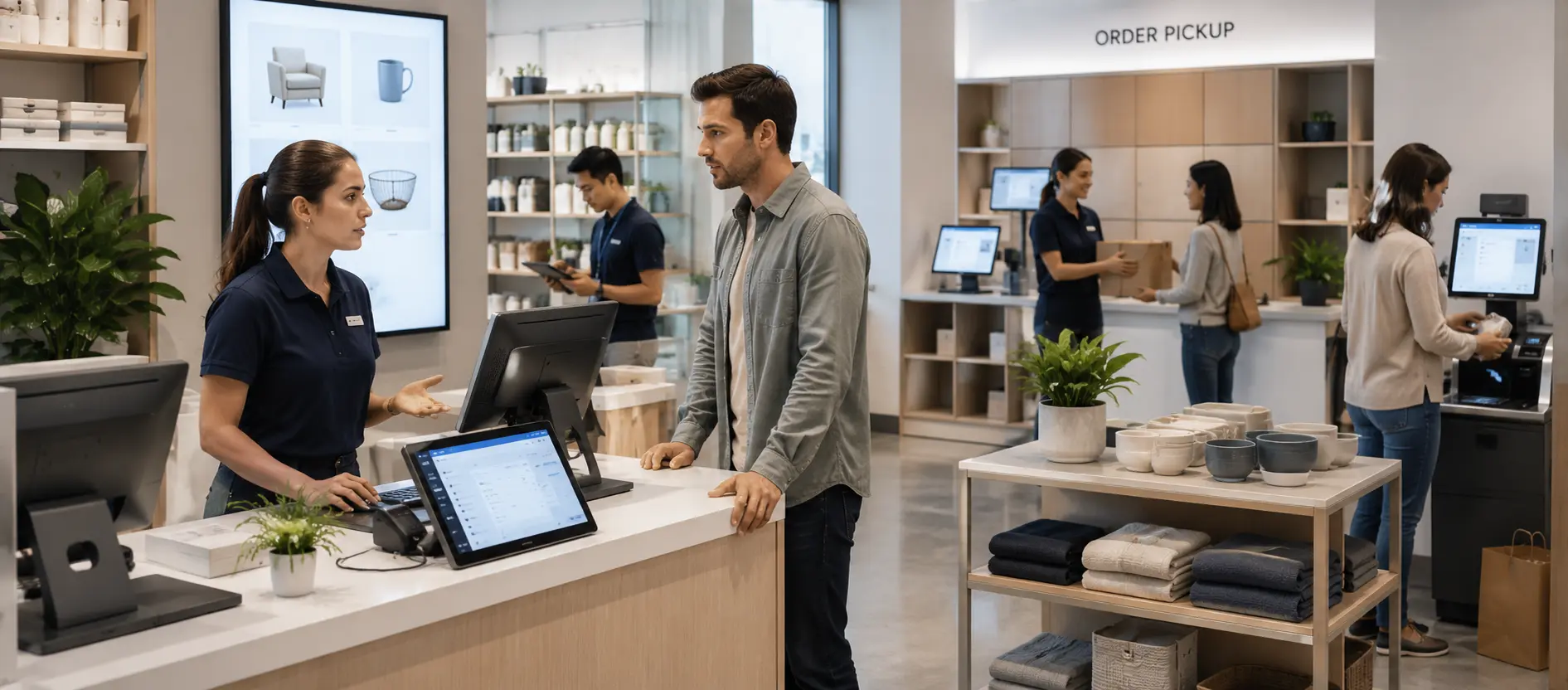

A customer asks where their pickup order is.
The associate checks the POS. Then the order screen. Then inventory. Then the customer profile. Then they ask a manager.
The customer is still waiting.
This is not a training problem. It is a retail systems problem being handed to the store floor.
Why are store associates struggling with retail technology? Their jobs now span checkout, fulfillment, returns, inventory, and service, but the systems behind those tasks often remain separate. The result is more switching, more training, and more time spent reconciling answers instead of helping customers.
The Store Job Changed. The Systems Did Not.
The store associate role used to be easier to describe.
Help customers. Stock shelves. Ring up purchases.
That job is gone.
Today, store teams are also handling pickup orders, online returns, ship-from-store work, loyalty questions, inventory checks, customer service issues, and product searches that may cross several locations and channels.
The numbers make the shift hard to ignore. In Salesforce’s Connected Shoppers Report, traditional checkout accounts for just 28% of an associate’s working hours. Store operations, customer service, fulfillment, returns, and other tasks fill the rest.
Retailers see the change too. In the same Salesforce report, 89% said the role of the store associate is broadening.
The problem is not that associates have more responsibility.
The problem is that every new responsibility often comes with another screen, another login, another workflow, and another place to look for the answer.
How Much Technology Is Too Much?
New associates now have to learn an average of 16 systems they will use every day, up from 12 in 2023, according to Salesforce’s research. They also spend 26 hours on technology training in their first month.
That is a lot of training for tools that are supposed to make work easier.
And it is not paying off the way retailers need it to. Salesforce found that 81% of retailers believe inefficient processes and technology drain store associate productivity. Only 17% of associates have a unified view of customer data.
Think about what that looks like during a real shift.
An associate can see that an order exists, but not why it is delayed.
They can see inventory, but not whether the item has already been promised to another customer.
They can see a loyalty account, but not the promotion the customer saw online.
They can start a return, but they still need a manager, a second device, or a call to customer service to finish it.
Every gap becomes human work.
Store teams memorize workarounds. Managers build side processes. Experienced employees become the only people who know how to get from one system to the next.
Then one of those employees leaves, and the store starts over.
Why More Training Will Not Fix It
Training matters. But training people to navigate bad handoffs is not the same as fixing the handoffs.
The 2026 State of the Retail Workforce report from RSR Research surveyed 100 retail executives, associates from 100 brands, and 1,000 US consumers.
Nearly 75% of associates said they feel underpaid and overworked, with little control over their schedules. Only 41% believed their employer offered real career advancement.
At the same time, 40% of retailers said customers expect a higher level of service in stores than they can reasonably provide.
That gap lands on the associate.
They are expected to know more, move faster, handle more channels, and still make the interaction feel simple for the customer.
Retailers cannot train their way out of that contradiction while the tools keep adding friction.
What Better Store Technology Looks Like
Better does not mean adding another dashboard.
It means reducing the number of places an associate has to look.
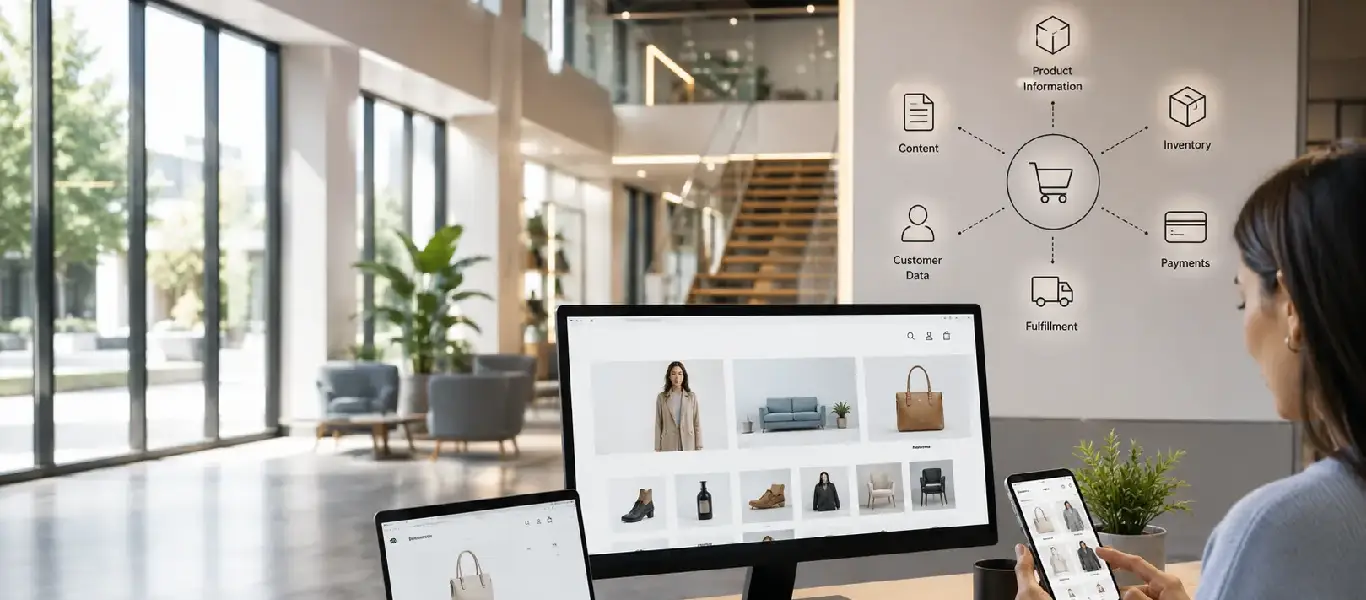
It means giving them one clear view of the customer, the order, the product, and the inventory behind it.
It means making the next step obvious when an item is missing, a pickup is late, a promotion does not apply, or a return needs attention.
It also means designing around the work associates actually do now, not the narrower job they did ten years ago.
That matters to employees. RSR found that 78% of store associates want to use the same kind of technology at work that they use in daily life, including phones and tablets.
They are not asking for more complexity.
They are asking for tools that make sense.
The strongest retail systems do not make associates carry the gaps between channels.
They remove the gaps.
Bottom Line
Store associates should not have to be the glue between POS, ecommerce, inventory, orders, loyalty, and customer service.
Their job is to help the customer.
When systems cannot agree, explain, or hand off the work cleanly, the store team pays for it in time, confidence, and service.
The fix is not another login.
It is making the systems behind the store work like one operation.
Want to see how SkillNet helps retailers connect store, inventory, order, and customer data? Learn more about StoreHub and SkillNet’s Omnichannel and Stores work.


 omnicanal y tiendas
 Ingeniería
 Technology Consulting