

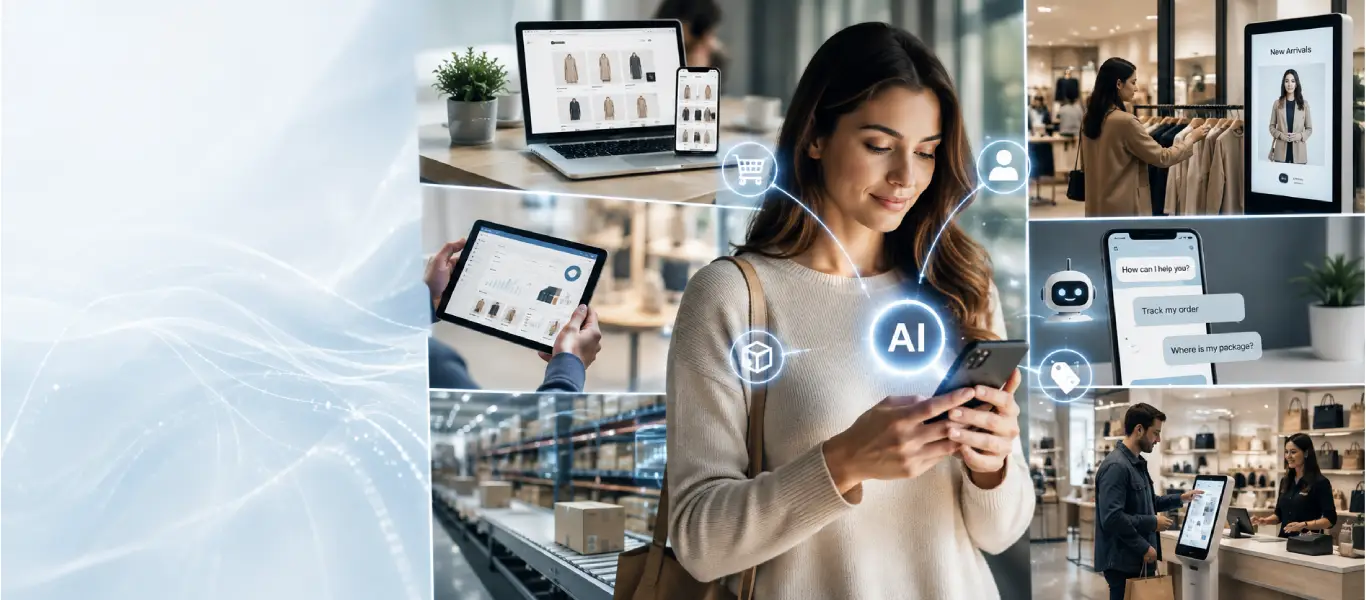

Retail has always been about meeting customers where they are. But today, users are everywhere. Sometimes, they are browsing websites, mobile apps, physical stores, marketplaces, and sometimes social channels. They even compare all these areas for a single shopping journey. AI is moving retail toward something more powerful. AI-powered commerce anticipates needs, automates decisions, and personalizes every interaction at scale.
Enterprise retailers have already become confident about adopting AI. This blog shows how to build AI-ready digital commerce systems that deliver measurable outcomes. So, read this content and have an idea.
Why Is AI Becoming Important in Digital Commerce Solutions?
AI in retail has evolved well beyond chatbots and recommendation widgets. Generative AI now serves as a foundational layer behind modern digital commerce solutions. It powers merchandising intelligence, dynamic pricing, demand forecasting, real-time inventory decisions, and conversational customer service. Embedding AI deeply into digital commerce solutions stops being a feature and becomes the entire operating model.
From Omnichannel Retail to AI-Powered Omnichannel Retail
Traditional omnichannel retail connected the channels, and AI-powered omnichannel retail makes those connections intelligent. Using AI, it becomes easy to integrate signals from e-commerce platforms, POS systems, mobile apps, marketplaces, CRMs, OMSs, and loyalty programs. Therefore, it helps develop a unified customer profile, which is being updated continuously and is capable of viewing each customer across every touchpoint. Hence, retailers can deliver consistent, context-aware experiences whether a customer is browsing online at midnight or anytime in the day. Remember, AI-driven omnichannel retail actively improves customers’ experience.
Personalized Shopping Experiences Across Every Channel
Personalization at scale is now possible with AI integration. AI and retail together create the most visible impact. AI-based product recommendations, powered by browsing behavior, purchase history, location, and real-time intent signals, maximize reliability and drive higher conversion rates. Therefore, it directly improves Customer Lifetime Value (CLV) in the retail metrics and creates long-term relationships with brands.
Predictive Inventory and Smarter Fulfillment
Inventory miscalculation is expensive. It can cause considerable loss. AI eliminates this chance. AI predicts demand using sales trends, seasonality, and regional behavior patterns, enabling retailers to right-size inventory before problems emerge. Inventory Visibility means knowing exactly where stock is across stores, warehouses, and fulfillment centers. Therefore, it enables BOPIS, ship-from-store, endless aisle, and same-day delivery to function reliably. Inventory accuracy is not an operational detail but the foundation of a strong AI-powered retail experience.
AI Store Assistants: Helping Frontline Teams Sell and Serve Better
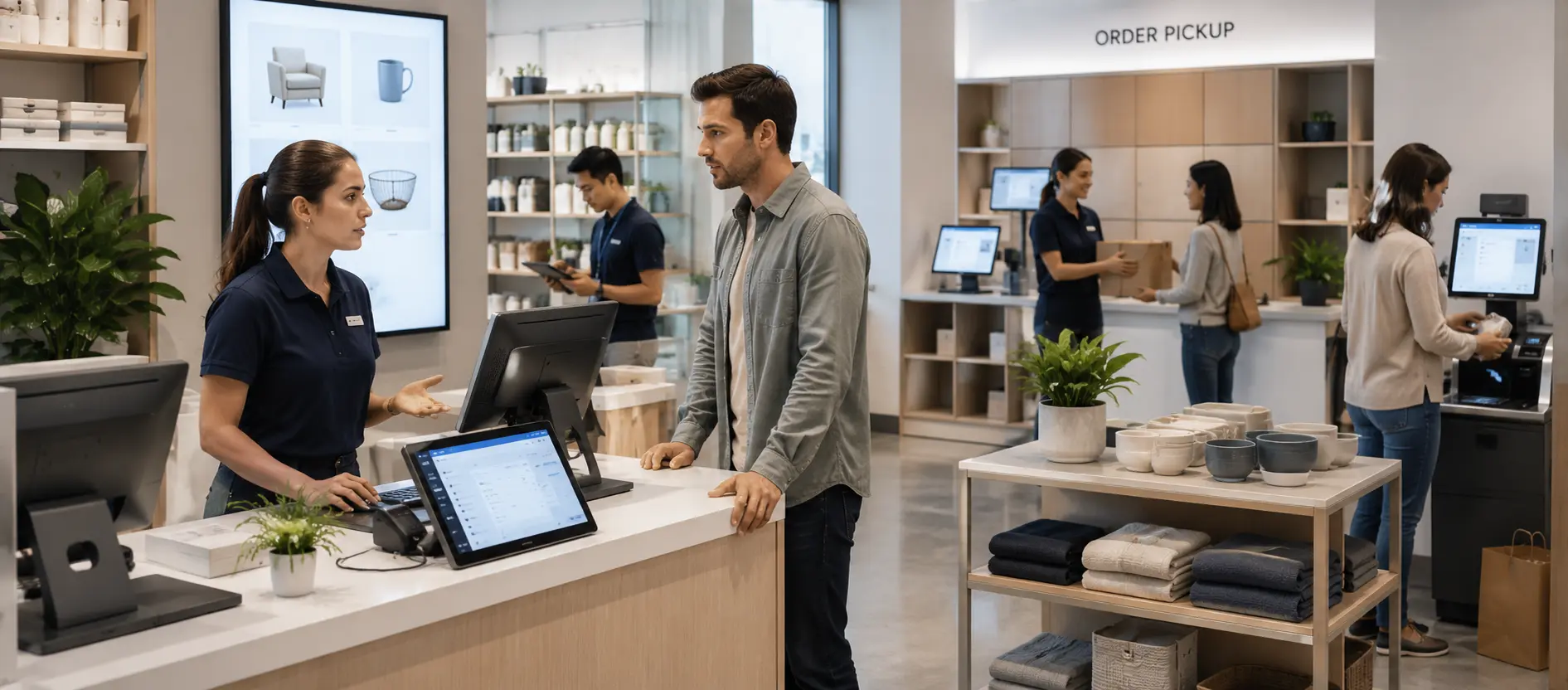
AI Store Assistants give store associates real-time access. Therefore, they can check customer history, product details, live inventory data, active promotions, and personalized recommendations directly from the shop floor. It improves assisted selling and streamlines returns and exchanges.
There is a significant workforce productivity angle, i.e., when frontline teams spend less time hunting for information, they spend more time building relationships and closing sales. At SkillNet Solutions, you will find the guide that empowers associates consistently.
Omnichannel Customer Service Powered by AI
AI agents now handle order tracking, returns, FAQs, delivery updates, loyalty queries, and product questions with speed and consistency that human teams alone cannot scale to. One of the most widely deployed capabilities today is Agent Assist. AI supports human service agents in real time with suggested responses, relevant customer context, and next-best-action guidance. As a result, you can experience a greater omnichannel customer service consistency and high-value interactions. This is where digital engagement experience becomes a hero to increase customer satisfaction scores.
Dynamic Pricing and Smarter Revenue Decisions
AI analyzes demand signals, competitor pricing, inventory levels, and customer behavior to recommend pricing decisions. It also considers the profit margin while improving conversion. Markdown Optimization with AI shows clear seasonal inventory and slow-moving stock. Therefore, sustainable profitability becomes easy.
What Retailers Must Get Right Before Scaling AI
AI fails when the foundations are weak. Before scaling, retailers need to address the following:
- Data quality: Clean, unified customer, product, order, and inventory data is non-negotiable
- Integración: E-commerce, POS, OMS, ERP, CRM, loyalty, and service platforms must work together
- Governance: Strong privacy, security, and data governance policies
- Change Management: Organizational readiness and stakeholder alignment are as important as architecture
- Clear use cases: Define business outcomes before selecting AI tools
- Scalable infrastructure: Cloud-native, API-first systems that can evolve
Retailers that skip these steps may fall behind competitors.
SkillNet POV: AI Works Best When Commerce, Stores, and Operations Are Connected
At SkillNet Solutions, the overarching strategic theme is Unified Commerce. It connects commerce, stores, and operations into a single, coherent system. Professionals working with this platform understand this matter well and focus on every detail when deploying AI in the retail industry. Having expertise in platforms like Oracle, SAP Commerce Cloud, Salesforce, Spryker, VTEX, Magento, AWS, and marketplace ecosystems, they can deliver a perfect model that is built for enterprise scale. The focus is always on helping retailers move from AI pilots to real ones and provide proven digital commerce solutions.
Conclusion: From AI Ambition to Measurable Commerce Outcomes
AI can transform retail, but for that, systems, data, and operations should be genuinely connected. Disconnected AI tools layered onto fragmented infrastructure produce noise, not outcomes. Top retailers who succeed with AI treat it as a business transformation, not a technology deployment. For which, they required following a practical roadmap, strong foundations, and a partner with deep retail expertise. Are you planning to move from AI ambition to measurable results? Speak with SkillNet Solutions and explore what an AI-ready digital commerce transformation looks like.
FAQs
What is AI-powered digital commerce?
AI digital commerce is a great application of artificial intelligence. From machine learning, generative AI, and predictive analytics, everything is there, and that helps automate and personalize every aspect of the commerce experience.
How is AI redefining the future of retail?
AI enables retailers to move from reactive to predictive operations, delivering personalized experiences at scale while optimizing pricing, inventory, and customer service simultaneously.
What is AI omnichannel retail?
It is a retail model where AI unifies customer data across all channels. It helps deliver consistent, intelligent experiences regardless of where or how a customer engages.
How can AI store assistants help retailers?
It provides instant access to customer history, inventory, promotions, and recommendations. Therefore, it improves both sales performance and workforce productivity.
Why do AI commerce projects fail?
Most failures trace back to poor data quality, siloed systems, lack of change management, or investing in AI tools before defining clear business use cases.


 omnicanal y tiendas
 Ingeniería
 Technology Consulting