



For enterprise retailers, a 24/7 Oracle Retail managed services model must extend far beyond basic ticket resolution. The right support model should maintain store operations, monitor critical retail systems, manage incidents, and address issues before they affect customers or associates. Retail technology does not stop after implementation. Retailers depend on core Oracle Retail support services to maintain daily operations across store checkouts, inventory visibility, merchandising decisions, order fulfillment, and omnichannel experiences. When a system failure occurs during peak trading hours, it directly impacts revenue, brand trust, and store register operations. Effective management requires combining continuous monitoring, proactive maintenance, and specialized retail engineering.
Why Post-Go-Live Support Looks Different for Retail
Retail environments often have limited opportunities for planned downtime because stores operate on fixed trading schedules. Business-critical applications in scope include point of sale, merchandising, inventory, order management, and core digital commerce engines. The cost of a slow or crashed system is never abstract; it appears as a physical line of frustrated shoppers at the register or a stalled fulfillment order that misses its shipping window.
Generic ERP or IT managed services models fall short here because they are built around ticket queues and business-hours patch cycles, not trading calendars, batch windows, and store-hours severity.
Store Operations and POS Support
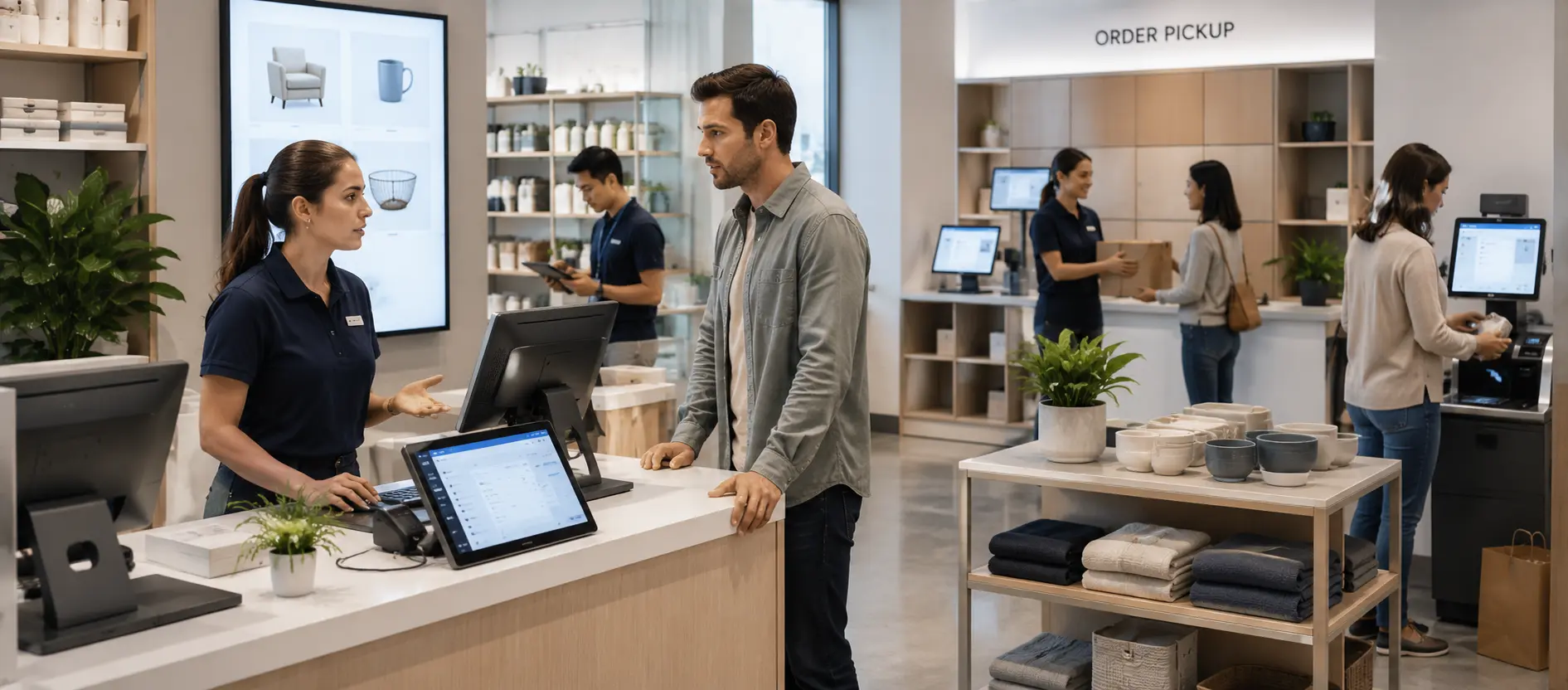
Register availability directly affects the ability to complete sales and maintain a smooth customer experience. A dedicated support model should account for round-the-clock coverage for Oracle Retail Xstore POS and Xstore Mobile, handling register lockouts, hardware configurations, and daily store open and close sequences. Payment processing continuity requires active troubleshooting for EFT Link and multi-tender payment integrations to prevent transaction failures. Support teams must address store-to-cloud or store-to-warehouse data replication issues that cause checkout delays. Mobile POS and clienteling workflows need the same support rigor as fixed front registers, since a stalled handheld loses a sale as surely as a locked register does.
Merchandising, Inventory, and Supply Chain Systems Monitoring
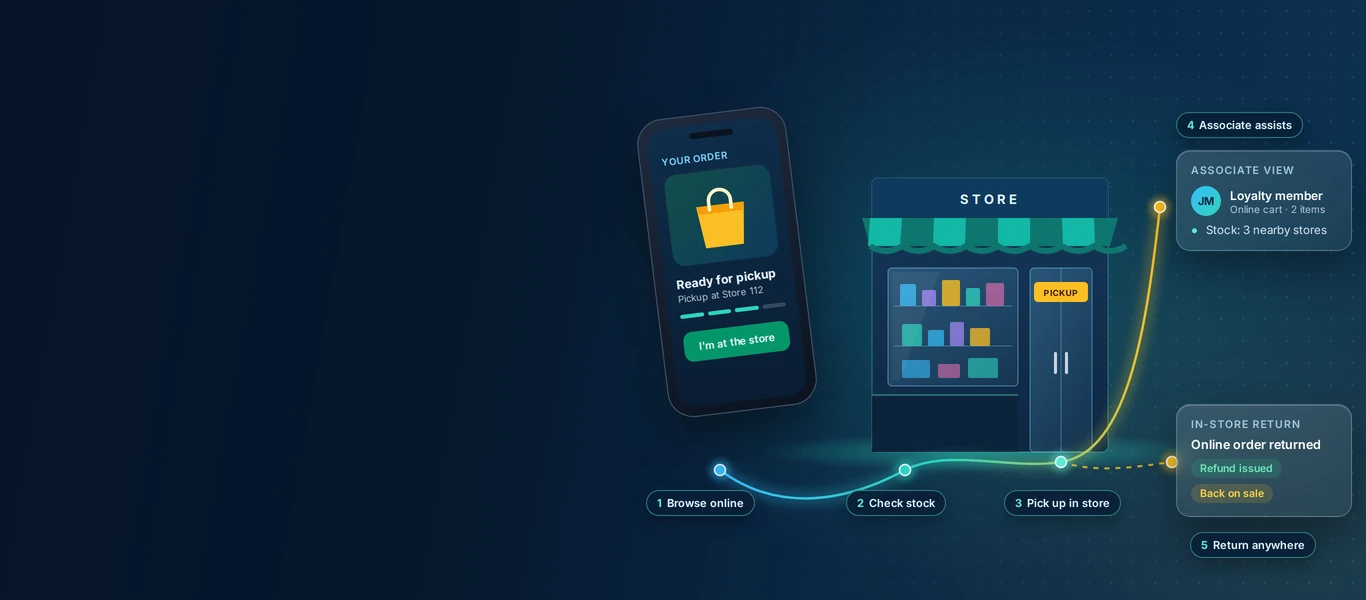
Back-office stability dictates front-office accuracy. A comprehensive support model can include monitoring across core merchandising applications such as Merchandising (RMS), Trade Management, Invoice Match, Replenishment Optimization, Sales Audit, and Retail Price Management. Batch window management carries equal weight: overnight merchandising, pricing, and sales audit jobs must finish before stores open, and a failed job found at 8 a.m. is already a trading-day problem. Real-time inventory visibility via SIOCS, ORSIM, and Store Inventory Management protects order flows and multi-channel inventory allocations. Additionally, robust support for Order Broker (OROB) and Order Management (OROMS) ensures smooth orchestration for buy online, pick up in store (BOPIS) and ship-from-store fulfillment.
Incident Management for Retail
Standard ticketing approaches can create challenges in retail when every issue is treated with the same priority. A mature Oracle managed services provider deploys a structured support framework across regions. SkillNet’s Soporte Global 24×7 model provides Level 1 to Level 3 Oracle Retail support across regions using a follow-the-sun approach. Level 1 handles functional helpdesk and triage, Level 2 takes technical investigation, and Level 3 addresses configuration changes, code fixes, and Oracle service requests.
Severity-based response times must reflect store-hours urgency. A register outage receives immediate triage, while lower-priority configuration queries follow standard workflows. Effective models eliminate escalation bottlenecks that trap tickets between the POS vendor, the integration layer, and the internal IT team. Single-partner accountability across POS, merchandising, and infrastructure removes gaps during an operational outage.
Proactive Monitoring and Maintenance
Reactive break-fix support is insufficient for modern retail architectures. According to New Relic’s 2026 Observability Forecast, high-impact IT outages cost organisations an average of $1.85 million per hour, reinforcing the need for continuous monitoring and faster incident detection in business-critical environments.
An advanced Oracle Retail managed services framework employs real-time system health checks, database tuning, and batch-job monitoring using SkillNet’s RetMON monitoring accelerator. Database administration ensures optimal performance for underlying Oracle databases supporting high-volume retail transactions. Cloud infrastructure monitoring is essential for retailers operating on Oracle Cloud Infrastructure (OCI) or hybrid environments. Surfacing data-flow and integration errors across enterprise integration buses and SkillNet’s StoreHub integration framework prevents minor messaging delays from cascading into inventory discrepancies or failed sales audits.
What to Ask Before You Sign a Managed Services Contract
Technology leaders evaluating support partners should examine prospective agreements against specific operational criteria:
- Does the partner support both cloud and on-premise Xstore environments?
- Are Service Level Agreements defined by store-hours impact, or do they rely on generic ticket-response metrics?
- Does the managed model include proactive database tuning and batch monitoring, or only reactive troubleshooting?
- Is there a single partner accountable across POS, merchandising, and integrations, or will internal teams be forced to coordinate multiple vendors during an incident?
How SkillNet Approaches 24×7 Oracle Retail Support
As an Oracle Retail implementation partner since 2005, SkillNet Solutions has delivered Oracle Retail programs for more than 200 retailers across 63+ countries, with more than 90% of its consultants holding relevant Oracle Retail certifications. SkillNet combines this Oracle Retail implementation expertise, including Oracle Retail Xstore implementation, with post-implementation support, monitoring, integration, and modernization. Purpose-built accelerators carry the load: StoreHub for integrations and RetMON for proactive infrastructure oversight. This single-partner support spans Xstore POS, merchandising, inventory, and broader digital commerce transformation initiatives, ensuring support operates as a direct continuation of implementation expertise rather than an abrupt handoff to an external maintenance desk.
Frequently Asked Questions
1. What should a 24/7 Oracle Retail support model include?
A robust model includes round-the-clock POS and mobile register support, merchandising and batch monitoring, tiered incident management, and proactive infrastructure oversight across relevant cloud and on-premise environments.
2. Do Oracle Retail managed services support both cloud and on-premise Xstore?
Yes. SkillNet supports Oracle Retail environments across cloud and on-premise architectures, with experience in Xstore implementations, modernization, integrations, and ongoing support.
3. What’s the difference between traditional support and a dedicated Oracle Retail managed services model?
Traditional enterprise support typically addresses software bugs or general patching through standard ticketing queues. A dedicated retail managed services model focuses on retail-specific operational continuity, store-hours urgency, batch-window management, and single-partner accountability across the entire retail technology stack.
4. How do enterprises transition to a new Oracle Retail managed services partner?
A transition typically involves knowledge transfer, documentation, a stabilization period, and a controlled handoff to the new support team managed by experienced retail integration specialists.
Getting Started: Building Your Oracle Retail 24/7 Support Roadmap
Maintaining continuous retail operations requires a support strategy designed for the unique pressures of omnichannel commerce. Explore SkillNet’s Soporte Global 24×7 capabilities or contact SkillNet Solutions to discuss your current operational model and build an Oracle Retail support roadmap aligned with your store, merchandising, and integration requirements.


 omnicanal y tiendas
 Ingeniería
 Technology Consulting