


Introduction
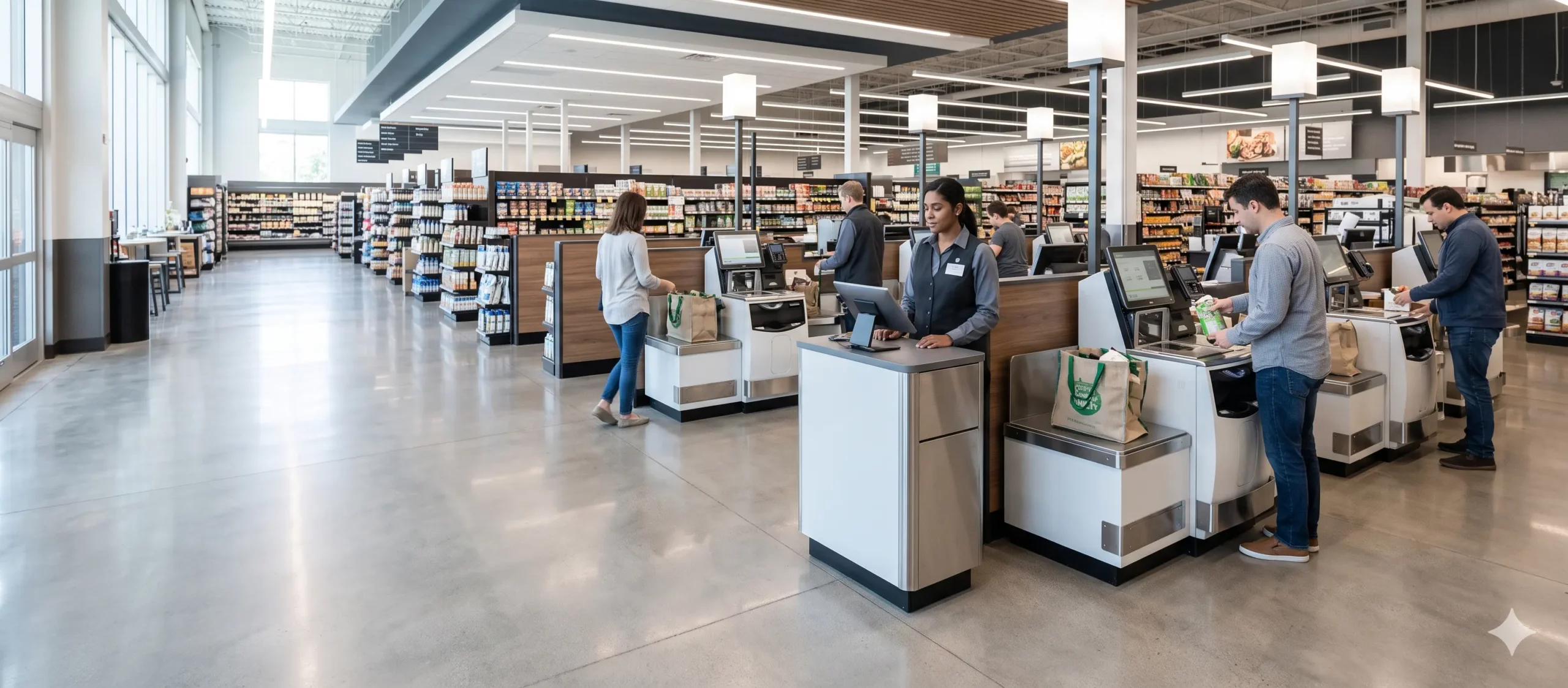
Self-checkout was supposed to be simple.
Fewer lines. Faster trips. Lower labor pressure. A little more control for shoppers who just want to get out of the store.
That was the pitch.
Now the story is messier.
Retailers are adding item limits. Lawmakers are looking at staffing ratios. Some stores are pulling kiosks back or moving to hybrid models. Customers still like speed, but the free-for-all version of self-checkout is getting harder to defend.
The problem is not that self-checkout exists.
The problem is that many retailers treated it like a labor shortcut instead of a controlled operating model.
Why Self-Checkout Is Facing New Pressure
A 2026 Kiplinger report noted that Ohio Senate Bill 415 would require at least one staffed checkout lane, one employee for every three self-checkout machines, and a 15-item limit for self-checkout transactions. The same report says other states are considering similar moves, including caps on machines and tighter oversight.
That is a loud signal.
When regulation starts designing your checkout experience, the operating model has already gotten away from you.
The data explains why the pressure is building. Kiplinger cited a 2025 LendingTree study finding that 27% of self-checkout customers said they had purposely taken an item without scanning it, while 69% said self-checkout makes stealing easier. It also cited Capital One data estimating theft can be up to 65% higher at self-checkout than staffed lanes.
Food & Wine, also citing LendingTree data, reported that intentional skip-scanning rose from 15% two years ago to 27%. It also reported that 36% of users said they had accidentally left with an unscanned item, and 61% of that group kept it.
The Real Cost Is Not Theft Alone
That last number matters.
Self-checkout risk is not only theft. It is ambiguity.
Did the shopper forget? Did the scanner miss? Did the produce code fail? Did the promotion confuse the transaction? Did the associate have too many kiosks to watch? Did the store layout make help hard to find?
A staffed lane has built-in checkpoints. A poorly run self-checkout area pushes those checkpoints onto the customer, then tries to catch mistakes after they happen.
That is not a great experience.
It creates suspicion for honest shoppers. It creates opportunity for bad actors. It creates awkward moments for store staff. It also corrupts inventory data, because every missed scan becomes a product that left the store without a clean signal.
Then the damage spreads.
The item is gone, but the system may still think it is available. Replenishment waits. Pickup availability becomes less reliable. Loss reports lag behind reality. Store labor gets pulled into exception handling. The customer sees locked cases, longer lines, more friction, and fewer reasons to enjoy the trip.
Self-Checkout Needs Better Controls, Not Less Convenience
That is why the next phase of self-checkout has to be less about machines and more about control.
Item limits can help. Clear staffing ratios can help. Better exception alerts can help. So can better product recognition, cleaner produce workflows, smarter lane design, and faster associate intervention.
But the biggest shift is mental.
Self-checkout should be managed like a high-risk, high-volume operating zone. Not like a corner of the store where shoppers quietly become unpaid cashiers.
The goal is not to kill convenience. The goal is to stop pretending convenience is free.
Every faster checkout model has a control cost. If retailers do not design for that cost up front, they pay for it later in shrink, bad counts, customer frustration, and public pushback.
The better question is not, should we keep self-checkout?
It is, where does self-checkout actually work, under what limits, with what staffing, and with what data flowing back into store operations?
That is a much healthier conversation.
Conclusion
Bottom line: self-checkout did not fail because shoppers hate speed. It started failing when speed got separated from accountability.
Want to see how SkillNet helps retailers connect checkout, loss, inventory, and operations data? Learn more about omnicanal e lojas and Analytics.


 omnicanal e lojas
 Engenharia
 Technology Consulting