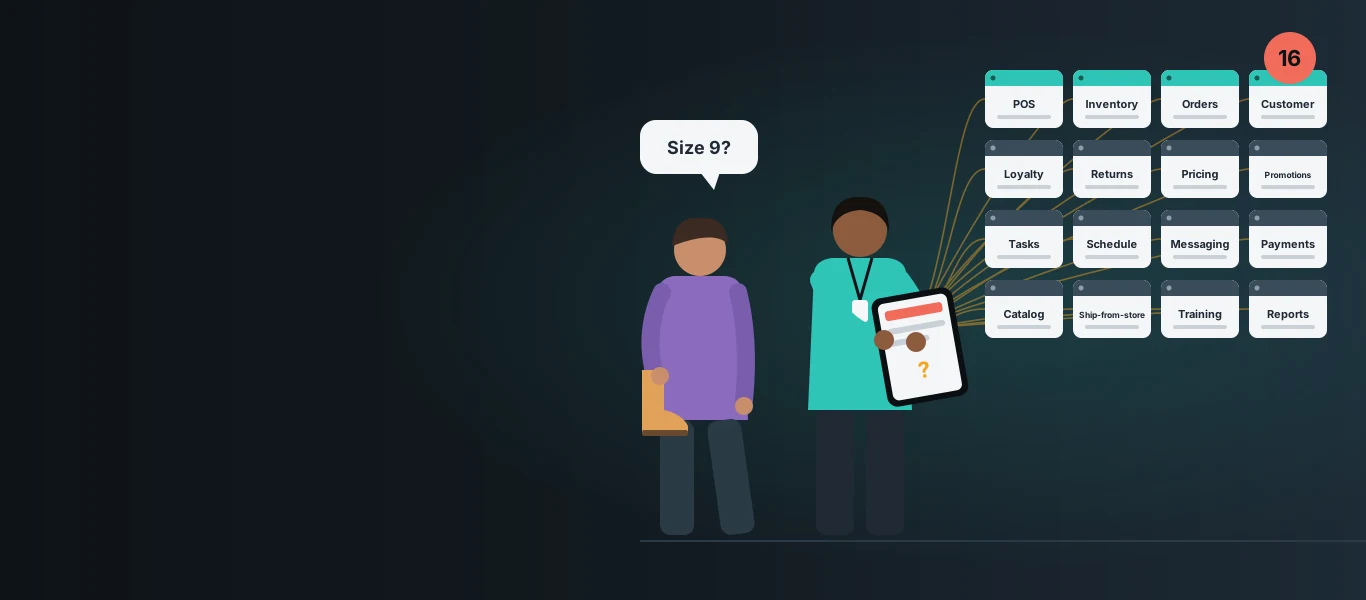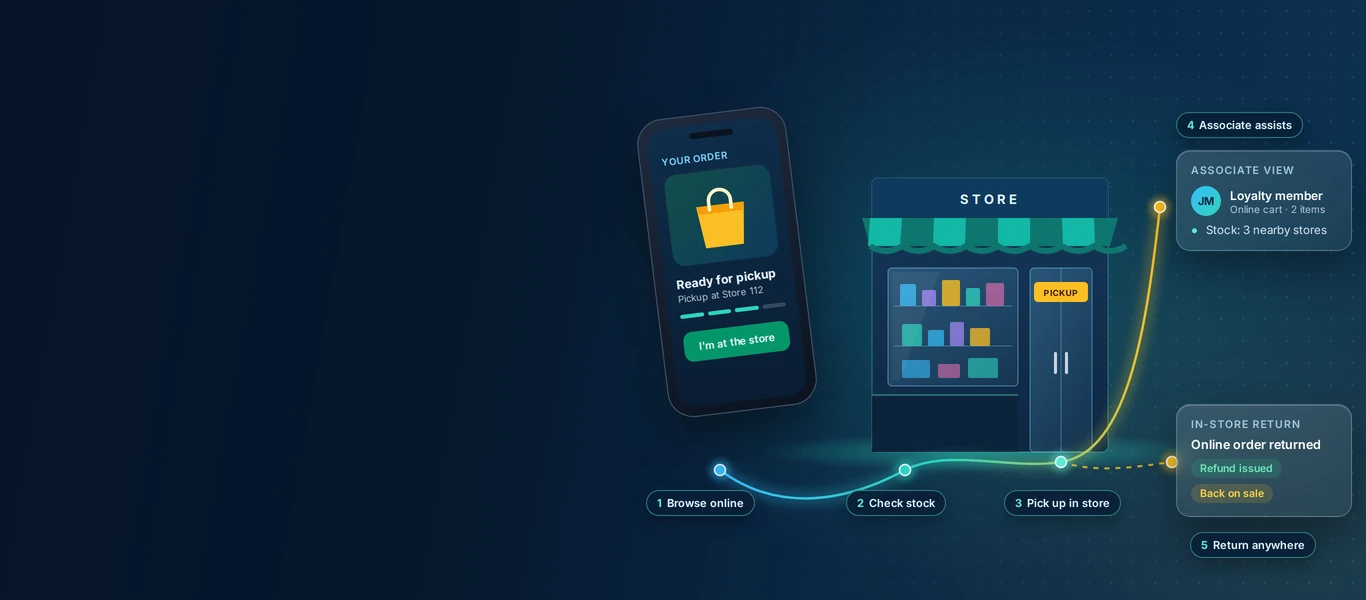


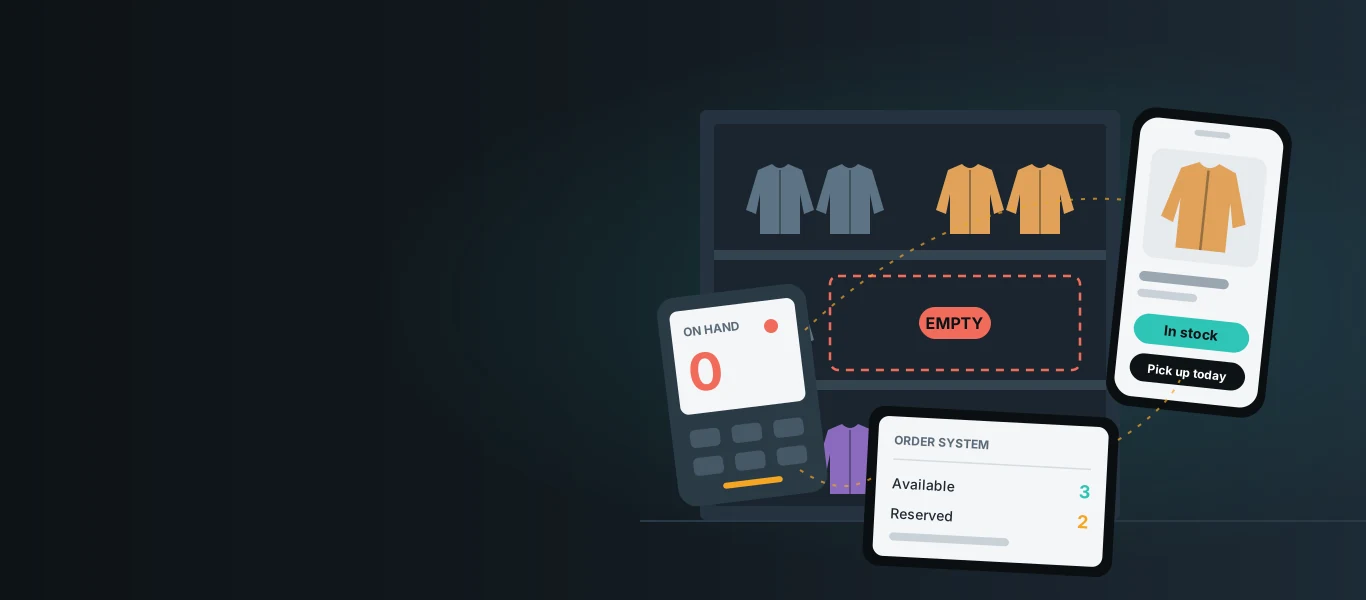

A shopper checks a jacket on her phone before driving to the store. The site says it is available. The shelf is empty. An associate checks another screen and sees a different stock count.
The customer does not need to know which system owns the record. She needs an answer she can trust.
During the holidays, that disagreement becomes harder to work around. There are more orders to pick, more stock movements and less time to investigate an exception. A delayed update can become a pickup promise the store cannot keep.
Find the point where the records disagree
Start with one item and one journey. Check what the site shows, what the store can sell and what the order system can reserve. Then follow a sale, a pickup cancellation and a return. Does every system reach the same answer? How long does it take?
Different numbers can have valid reasons. Stock on hand is not always stock available to promise. An item might already be reserved, damaged or waiting to be put away. The task is to make those rules clear and carry them across the journey, rather than asking associates to explain conflicting numbers.
Connect the process before adding another screen
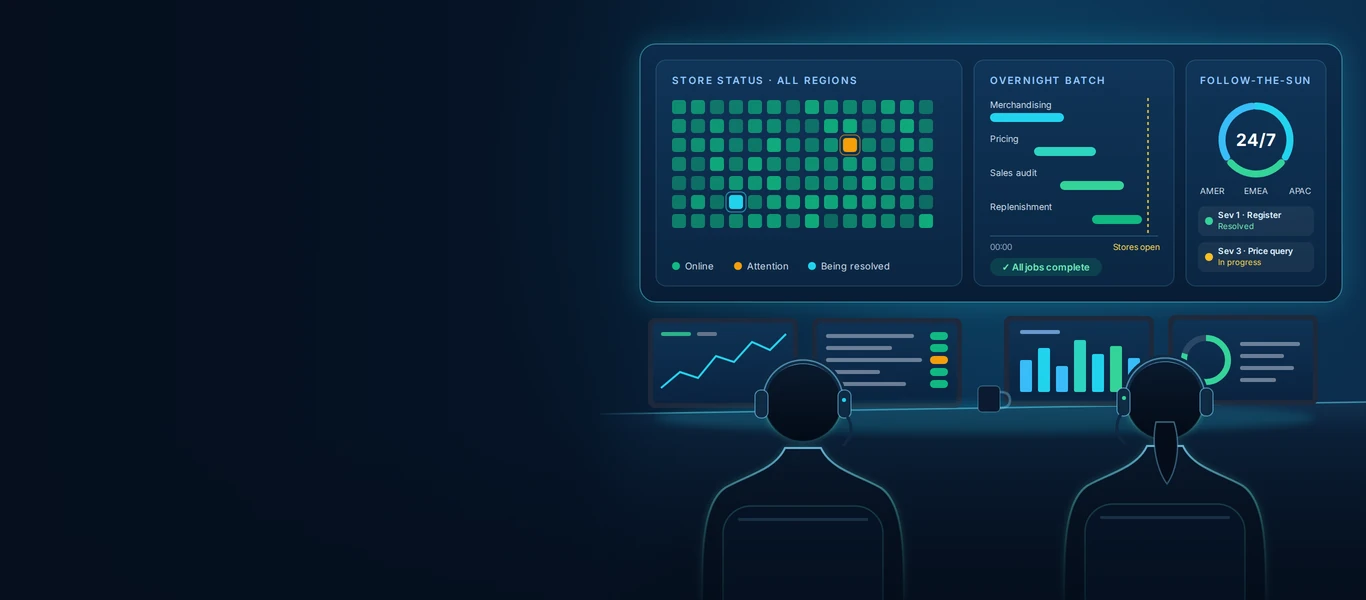
A useful fix starts with ownership. Decide which system owns each record, how updates move and what happens when an update fails. Connect product, inventory and order data through defined interfaces. Give the team a way to see exceptions and recover them.
This does not require replacing every application at once. A retailer can begin with a high-impact journey such as pickup, validate the data and operating process, then extend the same approach to returns or ship-from-store.
The same foundation matters for AI
An associate assistant can help find a product or explain an order status. But it still needs current, accurate information. If the underlying records disagree, a faster answer can simply repeat the wrong one.
Before letting an AI system act, define the actions it may take, the approvals it needs and the cases it must hand to a person. Keep a record of the decision and the data behind it.
A test to run today
For the holiday team, a practical test is small enough to run today: choose one item, place one pickup order and follow it through a cancellation or return. Record where the answer changes and who owns the fix.
Want to compare notes on your results? Meet SkillNet at NRF 2027, booth 1427.
References
SkillNet, Building a Unified Commerce Platform: How Composable Architecture and AI Create Seamless Customer Journeys. https://www.skillnetinc.com/resources/blogs/unified-commerce-platform-composable-architecture-ai/
SkillNet, Agentic AI in Retail POS: From Checkout to Autonomous Store Operations. https://www.skillnetinc.com/resources/blogs/agentic-ai-retail-pos/
FAQs
1. Why do the store, the app and the website show different stock for the same item?
Each system can keep its own record and update it on its own schedule. Stock on hand is also not always stock available to promise: an item may already be reserved, damaged or waiting to be put away. When those rules are not shared across the journey, each channel gives the customer a different answer.
2. How can a retailer find where its systems disagree?
Start with one item and one journey. Compare what the site shows, what the store can sell and what the order system can reserve. Then follow a sale, a pickup cancellation and a return, and record where the answer changes, how long each update takes and who owns the fix.
3. Do we need to replace our applications to fix retail data silos?
No. Decide which system owns each record, how updates move and what happens when an update fails. Connect product, inventory and order data through defined interfaces, start with a high-impact journey such as pickup, then extend the same approach to returns or ship-from-store.
4. Why do consistent records matter before using AI in stores?
An AI assistant reads the same records your team reads. If those records disagree, a faster answer can simply repeat the wrong one. Define the actions AI may take, the approvals it needs and the cases it must hand to a person, and keep a record of each decision and the data behind it.


 omnicanal e lojas
 Engenharia
 Technology Consulting