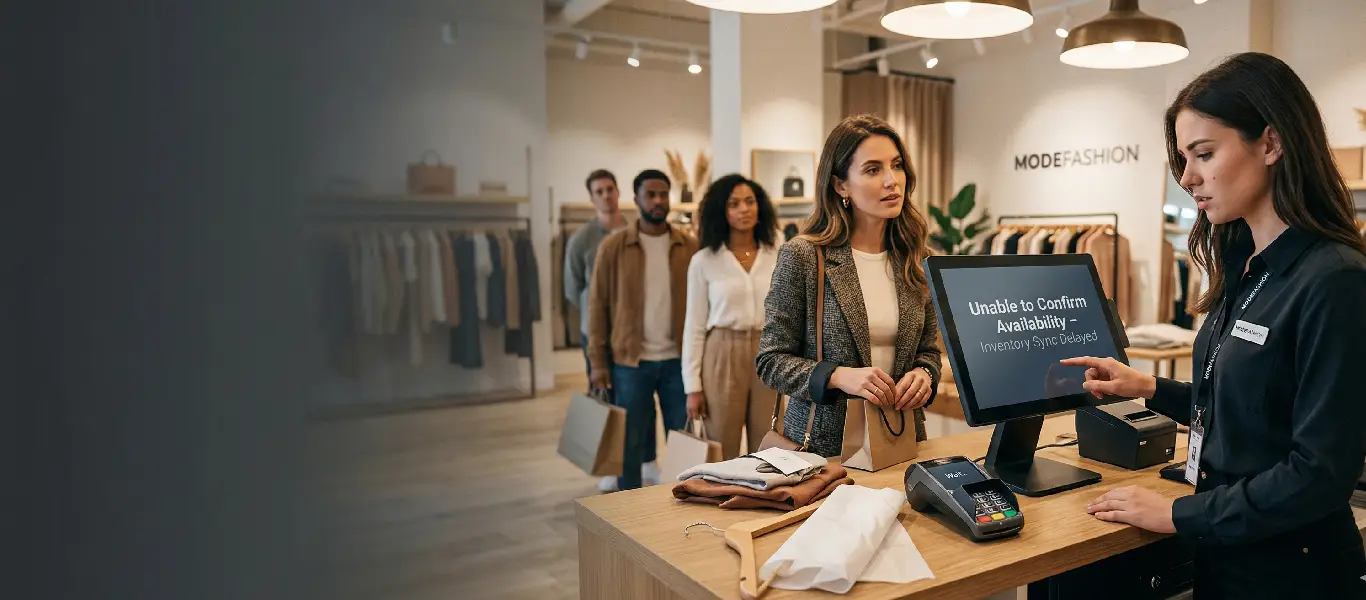



Retail used to be a game of educated guesses.
Teams would pull a report at the end of the day or the end of the week, and decide what to do next. That worked when demand was predictable, supply chains were steadier, and customers stuck to one channel.
That is not the world we are in anymore.
Today, the retailers that win are the ones who can see what is happening right now.
Not “what happened last Tuesday.”
Not “what the spreadsheet says after it refreshes overnight.”
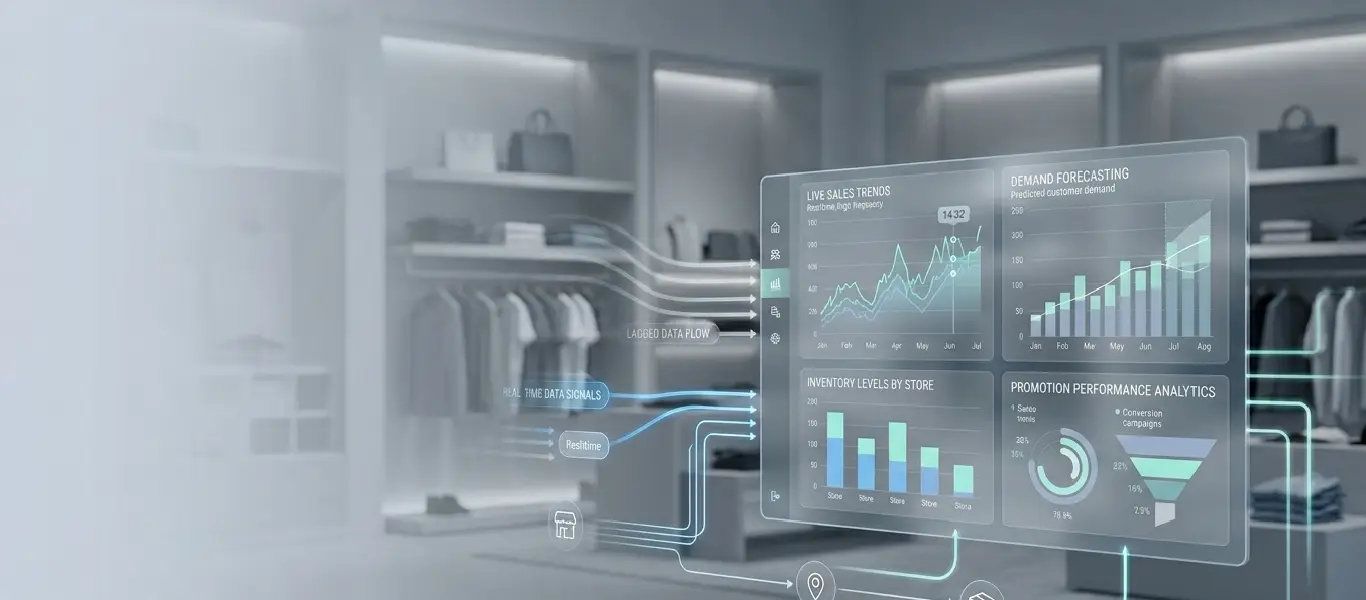
Real-time visibility means operations teams can access and use data as it happens. It is powered by a mix of connected devices, modern POS and OMS platforms, IoT sensors, and analytics that turn signals into decisions.
It used to be something only the biggest brands could afford. Now it is quickly becoming the baseline expectation for any retailer that wants to stay competitive.
The Inventory Optimization Imperative
If you want a fast, high-confidence ROI case for real-time visibility, start with inventory.
Traditional batch reporting creates two expensive problems:
- Stockouts, when the system says you have product, but the shelf is empty.
- Overstock, when you buy or transfer a product you no longer need.
That gap is why supply chain and inventory visibility have become prime targets for AI and automation. Deloitte reported that 30% of retailers were already using AI for supply chain visibility in 2025, with adoption expected to grow to 41% by 2026.
And the value shows up quickly. Wipro noted that real-time tracking can reduce stockouts by up to 30%.
What does that look like on the ground?
It is not magic. It is very practical:
- IoT sensors and connected systems keep counts current across stores and DCs.
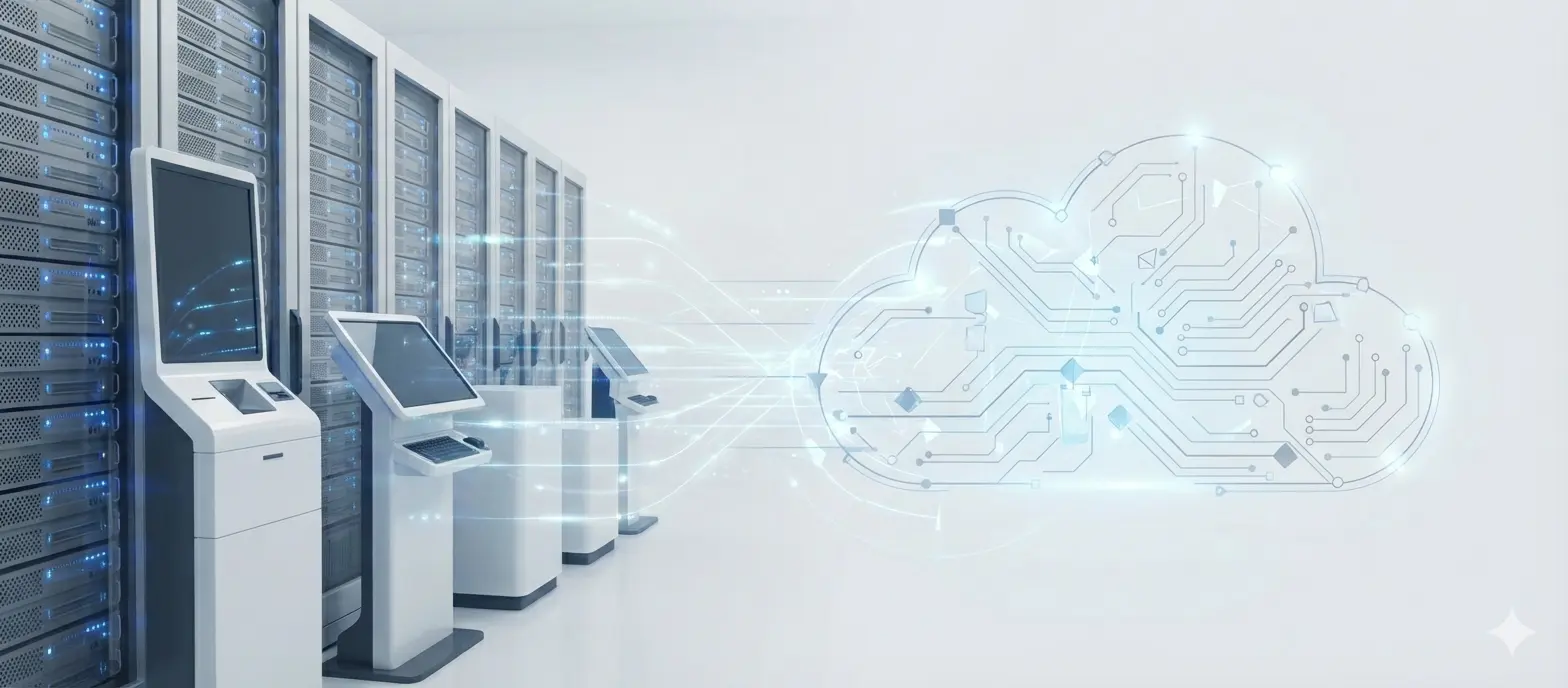
- Cloud platforms reconcile sales, transfers, receiving, and returns continuously.
- Automated order ingestion and real-time inventory analytics let teams reroute shipments and rebalance stock when demand shifts.
SPS Commerce found that this kind of dynamic rebalancing can improve turnover rates by 20% to 25%.
The alternative is painful. When visibility is delayed, even small disruptions, like a late truck, can snowball into missed sales. NRF has estimated global lost sales from supply chain issues at $1.75 trillion annually.
Enhancing Supply Chain Agility
Supply chains are more complex than they were even five years ago.
Global sourcing, faster delivery expectations, and the sheer number of selling channels mean there are more moving parts and more ways things can go sideways.
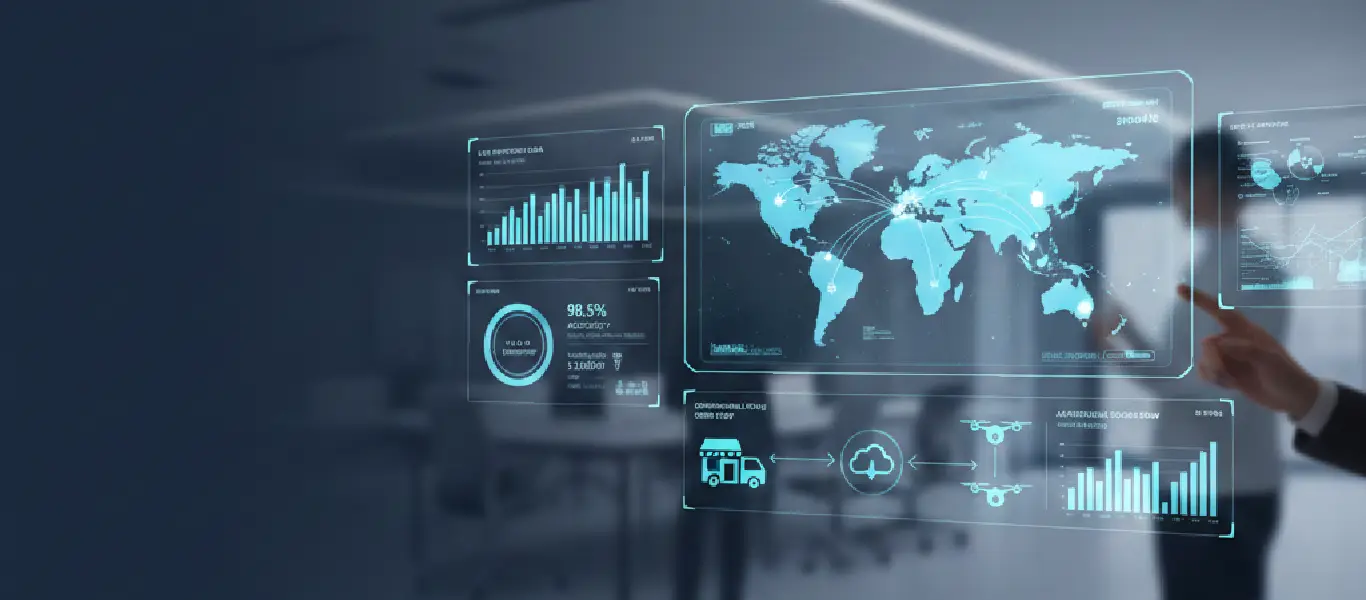
Real-time visibility gives teams the ability to respond in the moment.
Instead of waiting for a periodic update, teams can spot exceptions early and take action while there is still time to protect sales and service levels.
The market is reflecting that urgency. FMI’s 2026 report on real-time store monitoring projects growth from $2.4B in 2026 to $20.2B by 2036, driven by AI and IoT for operational insights.
And the operational improvements are measurable:
- Advanis’s 2025 retail guide points to 15% to 20% cost reductions when retailers use real-time data plus predictive analytics.
- McKinsey’s 2025 analysis suggests AI-enhanced visibility can improve demand forecasting accuracy by 20% to 30%, and reduce overstock by up to 35%.
There is also a trust component.
When data is stale, customers get “available online” experiences that turn into backorders and cancellations. Metapack’s 2025 trends describe this as the visibility gap, and it is a fast way to lose loyalty.
Agility is not a buzzword. It is the ability to keep promises.
Elevating Customer Experience
Customers do not think in terms of systems. They think in terms of outcomes.
- “Is it in stock?”
- “Can I pick it up today?”
- “Why did my order get canceled?”
If your teams do not have a unified, real-time view of inventory and orders, those questions become harder to answer, and every interaction is slower.
NielsenIQ’s 2026 consumer outlook notes that 71% of shoppers interact with 6+ touchpoints before purchase. In plain terms, buyers bounce between channels. They expect you to keep up.
When you do, performance improves:
- Invesp’s 2025 KPI guide notes that real-time analytics can boost conversion rates by 10% to 15%.
- Equatex’s 2025 research suggests omnichannel strategies with real-time stock visibility can reduce abandoned carts by 20%.
And personalization becomes more than a marketing concept. When visibility is live, personalization can be useful and timely, like recommending alternatives that are actually available nearby.
Grand View Research projects the AI-in-retail market reaching $40.7B by 2030, with real-time personalization playing a major role in customer satisfaction gains.
Driving Operational Efficiency
The less time teams spend chasing data, the more time they can spend improving outcomes.
Real-time visibility is one of the clearest ways to shift operations from reactive to proactive:
- You catch exceptions sooner.
- You reduce manual interventions.
- You shorten the time from problem to fix.
Wipro’s 2025 data-driven retail insights highlight that connected analytics platforms can reduce costs by 10% to 15% by identifying inefficiencies from sourcing to shelf.
SPS Commerce’s 2026 demand report also emphasizes that real-time performance monitoring is becoming foundational for supplier-retailer trust, with AI enabling automatic adjustments that cut response times by 40%.
FMI’s 2026 projections show store monitoring platforms using AI and video analytics improving fulfillment rates by 25%.
Without this baseline, retailers often pay a hidden tax in the form of extra labor and workarounds. SR Analytics’ 2025 CPG trends work estimates that the gap can add 15% to 20% in operational costs.
The Future: AI and Beyond
Real-time visibility is not the finish line.
It is the platform that makes the next wave of retail innovation possible.
Deloitte’s 2025 US retail outlook predicts AI spending will grow 35% year-over-year through 2029, with supply chain visibility leading investments.
The direction is clear:
- More continuous monitoring.
- More predictive decision-making.
- More automation that triggers the right action before humans ever have to open a report.
GrowthFactor’s 2025 retail research also points out a simple shift that matters: continuous monitoring is replacing batch reporting, and retailers doing this well can gain a 20% to 30% competitive advantage.
Bottom line
Real-time visibility has moved from “nice to have” to “how retail runs.”
If your teams can see what is happening as it happens, they can keep inventory balanced, adapt faster, serve customers better, and run leaner operations.
If they cannot, every disruption hits harder, and every decision takes longer than it should.
Real-time visibility is not a luxury anymore. It is the baseline.
Want to see what real-time visibility looks like in your environment?
Schedule time to chat with SkillNet Solutions.


 omnicanal e lojas
 Engenharia
 Technology Consulting