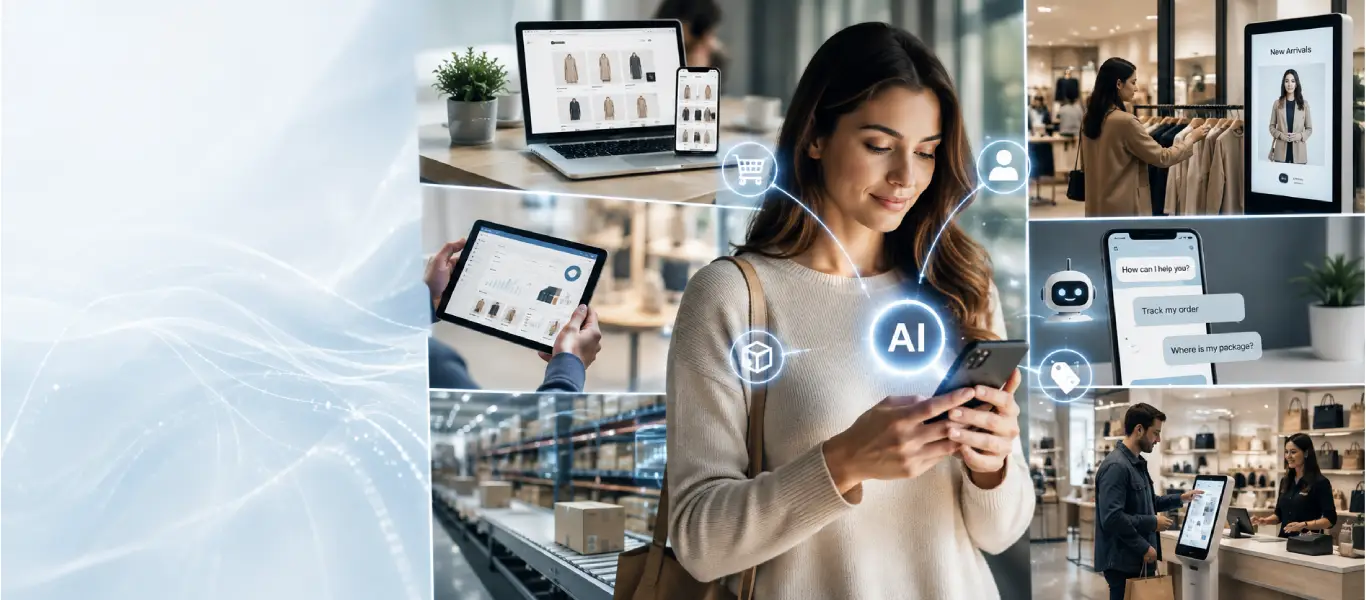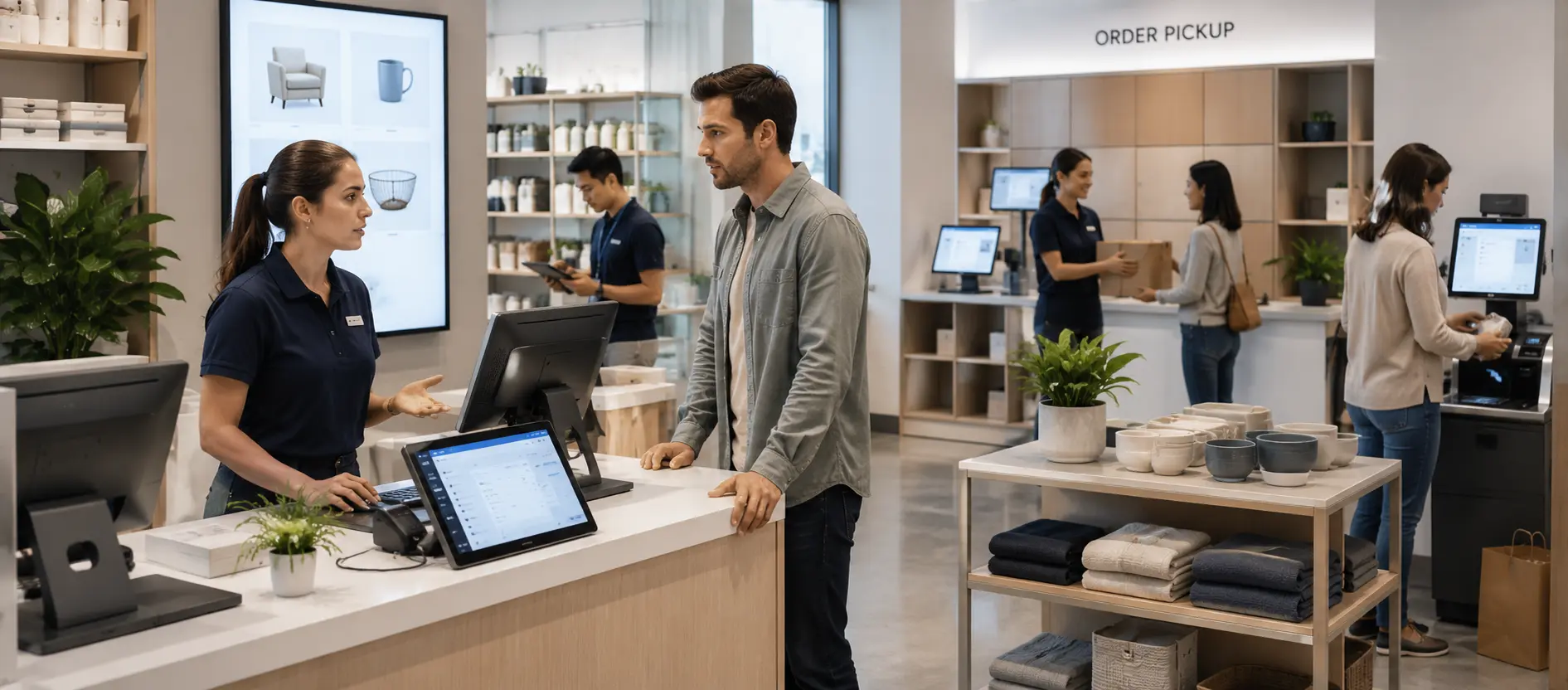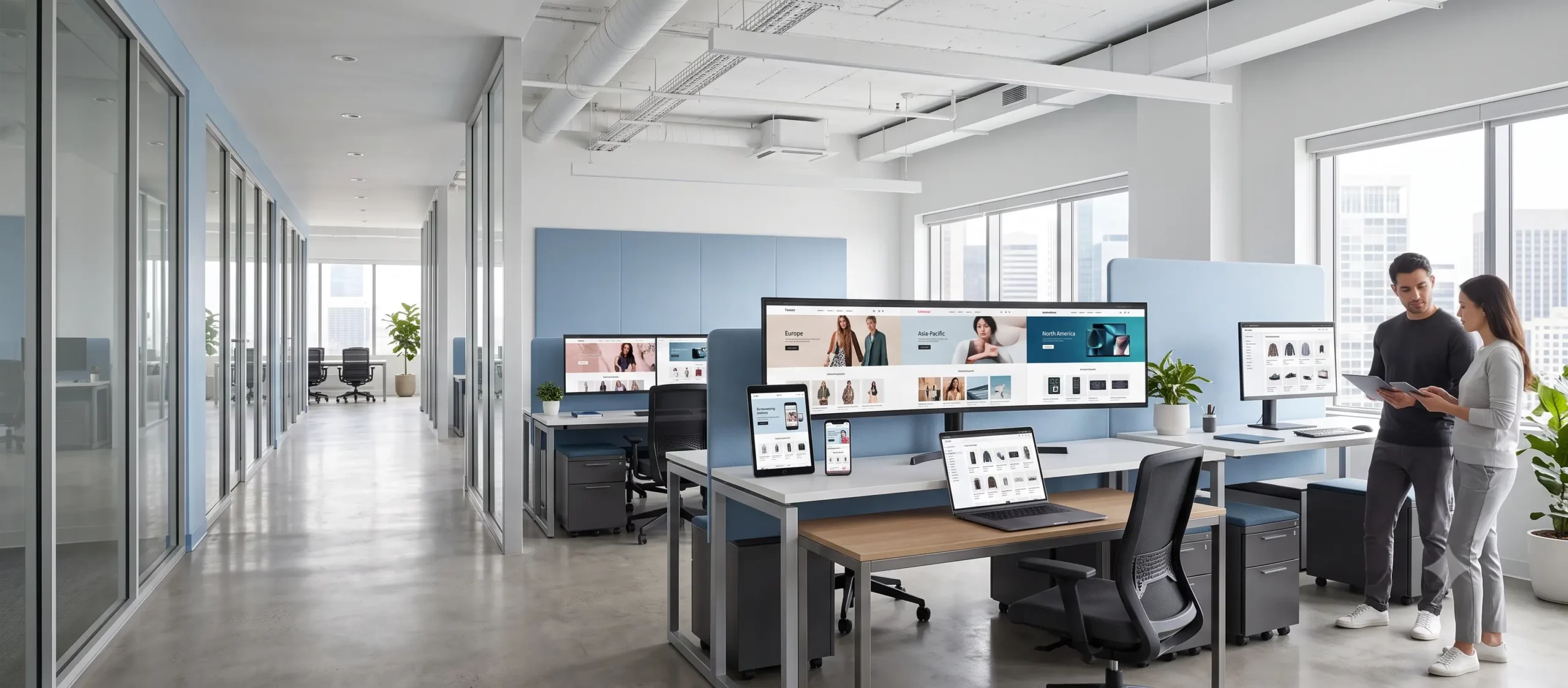




Modern retail strategy often lives or dies at the point of sale. POS has evolved far beyond a cash register. It’s now the critical integration point between high-level strategy and day-to-day operations. The checkout counter is no longer just the finish line; it’s the frontline of innovation in retail.
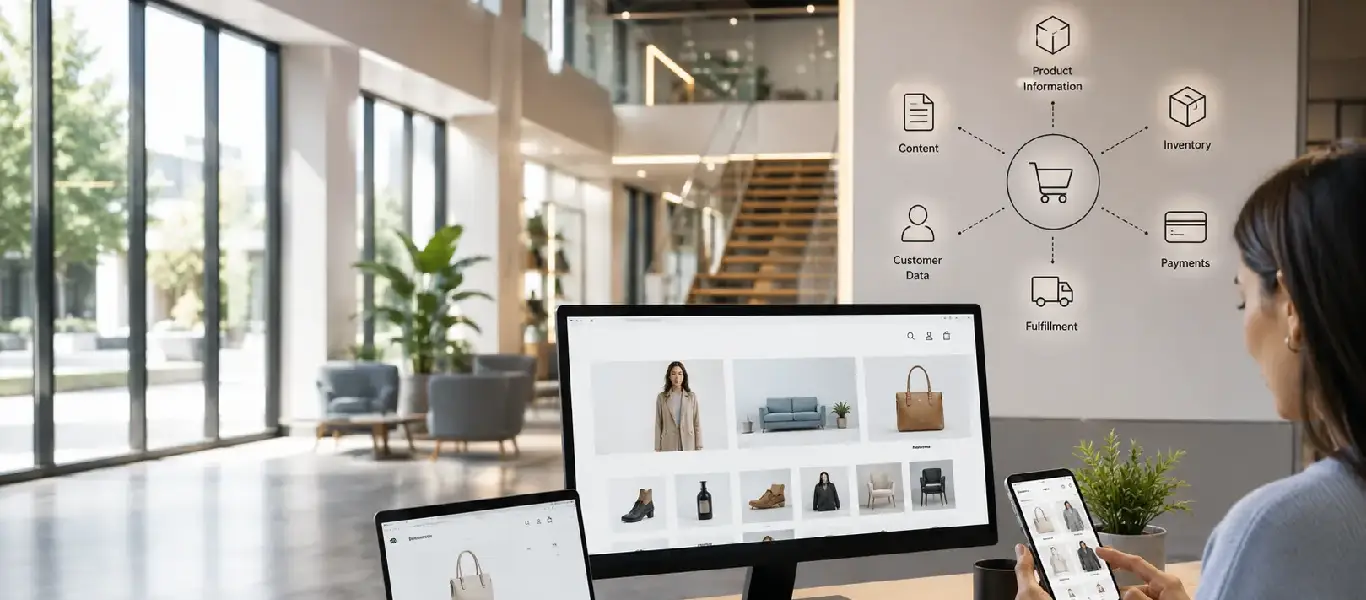
A modern POS system acts as a connected hub linking stores, ecommerce, inventory, and customer data into one ecosystem. Strategic goals like better customer experience, omnichannel consistency, and margin optimization all get executed through POS capabilities in real time on the shop floor.
From Strategic Goals to Daily Execution
Retail executives increasingly recognize that upgrading POS technology is vital to achieving their strategic priorities. Nearly half of retail leaders have made modernizing POS a top tech initiative, with 42% planning a POS refresh by 2025.
The top concerns cited by retailers today:
- Inventory Visibility (51%) – Accurate, real-time stock data across channels.
- Personalized Customer Experience (50%) – Empowering stores to tailor service and offers to each shopper.
- Empowering Store Associates (40%) – Giving front-line teams better tools and information to serve customers.
Modern POS platforms address all three priorities at once. They consolidate data across channels in real time, providing a single source of truth for sales, inventory, and customer information.
An associate using a cloud-based POS tablet can instantly check stock in any store or warehouse. This ensures customers can locate items and prevents lost sales due to stock-outs. The POS can pull up unified customer profiles – purchase history, loyalty status, and online browsing behavior. By connecting strategic data to operational touchpoints, the POS turns abstract goals like “know your customer” into concrete, daily practice.
Front-line staff armed with mobile POS devices are no longer just processing transactions. They’re leveraging real-time product and customer data to deliver experiences that fulfill the brand’s strategic promise. Mobile POS enables anywhere checkout and clienteling – associates can engage customers on the sales floor, look up product info or past purchases, and close sales on the spot.
Real-Time Data and Margin Enhancement
One of the most powerful aspects of a modern POS is its role as a real-time data engine driving both operational KPIs and strategic analytics. Every transaction flows from the register into a rich stream of data that informs inventory management, sales trends, staffing, and more.
Retailers can monitor store sales, conversion rates, average basket size, and other KPIs in real time at the corporate level. Transactions feed analytics, AI identifies patterns, and the POS becomes the core of retail intelligence for the enterprise.
This data-driven approach has a direct bottom-line impact. Studies have shown that retailers who integrate robust analytics into their POS see 5–10% increases in profit margins by making better decisions on pricing, inventory, and promotions.
Real-time inventory data from POS reduces stock-outs and overstocks that lead to markdowns. Modern POS user interfaces are far more intuitive, often tablet-based and touch-driven. This has reduced training time from weeks to hours for new store associates.
All these improvements contribute to healthier margins:
- Mobile POS and contactless payments can cut checkout times by roughly 25%.
- Staff spend less time on back-office tasks and more on selling.
- Retailers can continuously refine operations based on POS data.
One analysis found that a comprehensive POS modernization can produce a 566% return on investment in the first year alone when accounting for increased sales, labor cost reduction, and inventory savings.
Cloud Architecture and Headless POS
To fulfill its strategic role, the modern POS is built on a cloud-based, API-driven architecture that contrasts sharply with the rigid legacy register systems of the past.
Cloud POS eliminates the need for in-store servers and costly dedicated hardware at each location. Using consumer-grade tablets in place of proprietary registers cuts costs and gives stores more flexibility for pop-up registers and line-busting with mobile devices. Software updates and new features can be deployed immediately across the chain.
Perhaps most importantly, cloud-based POS is designed for integration. Open APIs make it far easier to connect the POS with other systems – from ERP to ecommerce platforms to emerging technologies.
A headless POS decouples the front-end interface from the back-end commerce services and logic. By separating the UI from the underlying processes, retailers gain the freedom to plug in new channels, devices, and experiences without overhauling the core platform.
Modern POS architecture follows the MACH principles – Microservices, API-first, Cloud-native, and Headless – to maximize agility:
- Microservices: New capabilities can be developed and deployed independently as needed.
- API-first design: The POS easily integrates with order management, inventory, CRM, and other systems.
- Cloud-native: Gives scalability and removes IT friction.
- Headless architecture: Makes it easier to add or update user touchpoints without disrupting core transaction processing.
In practice, this means the POS is ready to support whatever new strategy the business dreams up, from rapid pilot projects to international expansion, without needing a rip-and-replace of the whole system.
Real-World Impact
Retailers are seeing tangible results from modern POS initiatives. We can break down the impact into three time horizons:
Immediate (Year 1) – Hardware and infrastructure savings, lower training costs, and instant productivity gains. Faster checkout throughput and better customer service from day one.
Ongoing (Annual) – Sales increase thanks to enhanced mobility and omnichannel capabilities. IT and support costs decline because cloud POS requires less on-site maintenance. Better promotional effectiveness.
Long-Term (Strategic) – Operational flexibility to respond quickly to market changes. Stronger customer loyalty and engagement. Competitive differentiation through unified, data-rich POS platforms.
Real-world case studies reinforce these outcomes. One major specialty retailer doubled the number of SKUs available to sell by unifying store and online inventory visibility. Another retailer reduced checkout wait times by 30% with mobile POS, leading to higher customer satisfaction scores. Omnichannel shoppers, who spend roughly 1.5× more per month than single-channel shoppers, were better served once the retailer unified its POS and ecommerce platforms.
Conclusion
POS is where strategy meets operations. A modern POS platform connects high-level goals like offering unified omnichannel shopping or optimizing margins with on-the-ground execution: each transaction, each inventory movement, each customer interaction.
Retailers investing in cloud-based, integrated POS systems are seeing more agile operations, richer customer experiences, and measurable financial returns – often within months of deployment. In contrast, those clinging to legacy POS are finding it increasingly hard to keep up with savvy consumers and omnichannel demands.
The message for retail operations leaders and enterprise architects is clear: modernizing the POS is a strategic imperative. It’s not simply about processing sales faster. It’s about enabling your entire business to run smarter and more cohesively.
By embracing cloud and headless architecture, real-time data integration, and analytics-driven insights at the POS, retailers can align their strategy with flawless execution. The POS is no longer a transactional endpoint. It’s the starting point for retail success, where strategy becomes reality one scan at a time.


 omnicanal e lojas
 Engenharia
 Technology Consulting